🔥 10% OFF FIRST ORDER · POUCHFLIP10

Are Nicotine Pouches Better Than Vaping? What Canadians Should Know

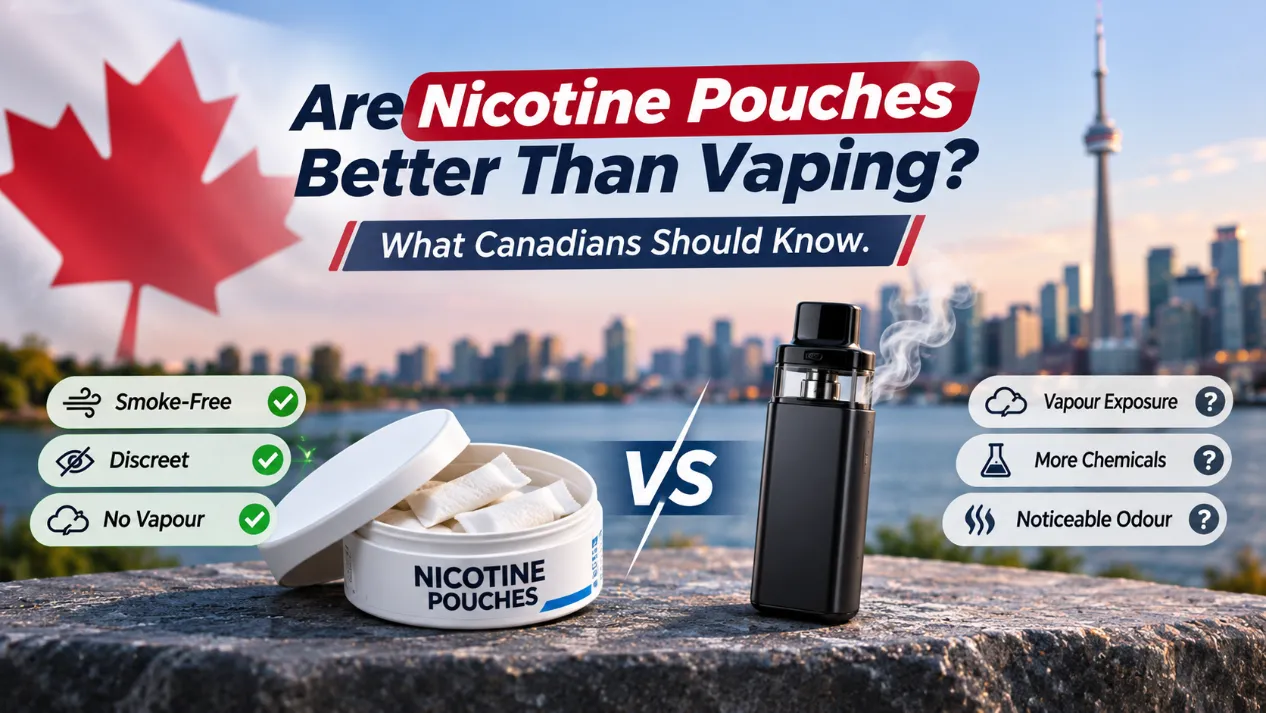
Nicotine pouches offer an alternative to vaping without the need to inhale aerosol, which may make them a less harmful option for lung health. However, they are not risk-free. Pouches can cause gum irritation, deliver high levels of nicotine, and still have potential health effects that require further research. The better choice depends on individual preferences, health considerations, and nicotine use goals.
Key Points
- Lungs: Pouches probably win. Nothing is inhaled, so you avoid vaping aerosol. Health Canada says vaping can expose you to chemicals that harm your health.
- Mouth and gums: Vaping probably wins. Pouches sit against your gum and can cause soreness, irritation and gum recession.
- Addiction: It is a tie. Both deliver nicotine, and strength and frequency matter more than the format.
- Quitting: Neither is a proven route to quit nicotine. No trial has tested pouches as a way to stop vaping.
Nicotine Pouches vs Vaping at a Glance
| Factor | Nicotine pouches | Vaping |
|---|---|---|
| How you use it | Placed between lip and gum. Nicotine absorbs through the lining of your mouth. | You inhale aerosol made by heating e-liquid. |
| Lung exposure | No inhaled aerosol | Aerosol reaches your lungs and can contain harmful chemicals |
| Mouth and gums | Soreness, irritation and possible gum recession | No pouch against the gum, but vaping has its own respiratory effects |
| Nicotine dose | Varies widely by brand and strength | Varies by device and liquid. Canadian rules cap liquid strength at 20 mg/mL |
| Research | Newer, with limited long-term data | Studied longer, but long-term effects are still unknown |
| Evidence for quitting smoking | Limited, according to a 2025 Cochrane review | Mixed. A Canadian guideline conditionally recommends against e-cigarettes for quitting |
| Status in Canada | Only Zonnic is authorized, as a quit-smoking aid | Sold as a regulated consumer product. Provinces set the minimum age |
How Do Nicotine Pouches and Vapes Work?
How nicotine pouches work
A nicotine pouch is a small, tobacco-free packet of nicotine, flavouring and fillers. You tuck it between your lip and gum for 20 to 60 minutes. Nicotine seeps through the lining of your mouth into your bloodstream. You don’t smoke, inhale or spit.
Strength is the biggest variable. Pouches range from mild to very strong, so it helps to know the difference between low-strength nicotine pouches and strong nicotine pouches before you compare them with a vape.
How vaping works
A vape heats a liquid, usually containing nicotine, propylene glycol, glycerin and flavourings. You breathe the resulting aerosol into your lungs, where nicotine reaches your bloodstream quickly. The device can be a disposable, a pod system or a refillable tank.
Are Nicotine Pouches Better for Your Lungs Than Vaping?
Probably, yes. Pouches don’t produce aerosol, so your lungs aren’t exposed to it. Vaping aerosol, on the other hand, can contain chemicals that Health Canada links to health risks. Long-term effects are still being studied.
The most serious lung risk tied to vaping is vaping-associated lung illness. The 2019 outbreak in the United States caused thousands of hospitalizations, and the Public Health Agency of Canada investigated cases here too. US evidence points to vitamin E acetate, an additive in unregulated products, but Health Canada says the cause is still not clear.
One caution: “probably better for your lungs” is not “proven safer overall.” No long-term study has compared pouches and vapes head to head. A 2025 Cochrane review found no serious short-term harms from pouches in small studies, but it also stressed how limited the evidence is.
Which Is Worse for Your Mouth and Gums?
Pouches are the bigger concern here. They sit against the same patch of gum for up to an hour, and nicotine can irritate that tissue. The American Dental Association says the products are known to cause oral inflammation and local tissue damage, including irritation and gum recession. The Eastern Ontario Health Unit also lists nausea, hiccups and a sore mouth as short-term effects.
If you use pouches, see a dentist if you notice sores, white or red patches, bleeding or receding gums. Some readers also ask whether nicotine pouches cause cancer. The short version is that long-term data are still missing.
Which Is More Addictive: Nicotine Pouches or Vapes?
Both are addictive, because nicotine is the addictive ingredient in each. The format matters less than how much nicotine you take in and how often.
Here is what recent research shows:
- A US study of urine biomarkers found that people who used only pouches had nicotine levels similar to people who only smoked. Their levels were higher than people who only vaped. (Nicotine & Tobacco Research, 2025)
- A Finnish cotinine study found mostly no difference between pouch users and vapers. Some pouch users, however, had higher levels than cigarette smokers. People who combined several products had higher levels still. (PopNAD)
- The Cleveland Clinic warns that some pouches carry more nicotine than a cigarette.
At the extreme end, brands such as Pablo nicotine pouches sell products far stronger than the 4 mg Zonnic pouch. Tracking how many nicotine pouches you use per day is one practical way to keep your total intake in check, whichever product you choose.
Is Switching From Vaping to Nicotine Pouches a Good Way to Quit?
The evidence doesn’t say yet. The 2025 Cochrane review included four small trials, all in people who smoked. It found no trials on using pouches to stop vaping. One small trial compared pouches with e-cigarettes. Quit rates may have been lower with pouches, but the certainty was low.
A pouch is still nicotine. If you swap a vape for a pouch, you change how you take nicotine but not the dependence. If your goal is to quit, a plan matters more than the product:
- Talk to a pharmacist or doctor. They can match a quit aid to your usage.
- Use proven support. Behavioural coaching, such as B.C.’s QuitNow service, raises your chances of quitting. Check your provincial health service for local options.
- Step down gradually. Lower the strength or the number of uses over time rather than switching formats.
The picture for smoking is different. A Canadian guideline reported by CBC conditionally recommends against e-cigarettes for quitting, and no vape is approved as a quit aid in Canada. The same report points to cytisine and varenicline as medication options.
Flavour, Convenience and Discretion
Vapes usually offer more flavour variety and give the hand-to-mouth feel of smoking. Pouches are more discreet. There’s no vapour cloud and no device to charge, which many people find easier in daily life. Workplace and venue rules still apply, so check them first.
Flavour choice for pouches is wide too. Our VELO flavours guide shows how much range a single brand can cover.
Nicotine Pouches vs Vaping in Canada: What the Rules Say
Canada treats the two products very differently.
- Pouches: Health Canada has authorized one brand, Zonnic, as a nicotine replacement therapy for adults who want to quit smoking. Since 28 August 2024, pouches of this type must be sold from behind a pharmacy counter, and only mint and menthol flavours are allowed.
- Other pouch brands: The Eastern Ontario Health Unit notes that unauthorized pouches may contain excess nicotine or ingredients missing from the label. Health Canada reminds consumers that pouches should not be used recreationally, by non-smokers or by anyone under 18.
- Vapes: Nicotine vapes are regulated as consumer products for adults, with a 20 mg/mL cap on nicotine in liquids. No vape is approved as a smoking cessation aid.
Rules and enforcement change, so confirm current requirements for your province. For product-level detail, see our guide to buying nicotine pouches online in Canada.
Who Might Choose a Pouch, and Who Should Skip Both?
A pouch may suit you if you:
- already use nicotine daily and want to stop inhaling aerosol
- smoke and want a smoke-free alternative, ideally with a pharmacist’s guidance
Skip both if you:
- don’t currently use nicotine
- are under 18
- are pregnant or breastfeeding
- have a health condition that nicotine could affect, such as heart disease (ask your doctor first)
HealthLink BC puts it plainly: the best thing for your health is to avoid tobacco and nicotine altogether.
The Verdict: Are Nicotine Pouches Better Than Vaping?
Pouches are probably better than vaping for your lungs and worse for your gums. They are roughly equal on addiction and unproven for quitting. If you already use nicotine and want to stop inhaling, a lower-strength pouch removes the aerosol problem. If you don’t use nicotine, neither option improves your health.
This article is general information, not medical advice. Speak to a pharmacist or doctor about quitting or switching nicotine products.
Frequently Asked Questions
Are nicotine pouches safer than vaping?
Not proven. Pouches avoid inhaled aerosol, which likely lowers lung exposure. But no long-term study compares them directly with vapes, and pouches can irritate your gums. Both deliver addictive nicotine, and the safest choice is to use neither.
Which is more addictive, nicotine pouches or vapes?
Neither format is clearly more addictive. Addiction depends on the dose and how often you use it. Some pouches deliver as much nicotine as a cigarette or more, and vapes vary with the device and liquid strength.
Can nicotine pouches help you quit vaping?
There is no clinical evidence yet. The 2025 Cochrane review found no trials on pouches as a way to stop vaping. If you want to quit, a pharmacist or doctor can suggest a plan, and provincial services such as B.C.’s QuitNow offer coaching.
Are nicotine pouches worse than vaping for your teeth and gums?
Pouches are more likely to irritate your gums, because they sit against them. Reported effects include soreness, white patches and gum recession. No study compares gum health between pouch users and vapers directly. See a dentist if sores or patches last more than a couple of weeks.
Is it safe to use nicotine pouches and vape together?
It is not recommended. Using several products makes your total nicotine intake harder to track. The Finnish study found higher cotinine levels in people who used multiple products than in people who only smoked or only vaped.
Are nicotine pouches healthier than smoking?
Likely lower risk, but not harmless. Pouches contain no tobacco leaf and involve no combustion. Switching completely from cigarettes reduces exposure to harmful substances, according to the 2025 Cochrane review. They still deliver addictive nicotine and can harm your mouth.
Are nicotine pouches or vapes better for quitting smoking?
Neither is a proven first choice. Health Canada authorized one pouch brand, Zonnic, for quitting smoking, but evidence is limited. A Canadian guideline conditionally recommends against e-cigarettes. Proven options include nicotine replacement therapy, varenicline, cytisine and counselling.
Are nicotine pouches legal in Canada?
Only one brand is authorized. Health Canada authorized Zonnic as a quit-smoking aid, sold from behind pharmacy counters in mint and menthol flavours. Other pouch brands are not authorized, and public health units warn they may contain excess nicotine or unlisted ingredients.